

Understanding Fibre Optic vs Copper Cabling
A reliable network starts with the right cabling infrastructure. For businesses, schools, institutions, data centres and other organisations, choosing between fibre optic and copper cabling can have a significant impact on network performance, reliability and future expansion.
Both technologies continue to play an important role in modern networking. The right choice depends on factors such as distance, bandwidth requirements, installation environment, network equipment and the specific needs of the organisation.
Understanding how fibre optic and copper cabling differ makes it easier to design a network that can support both current operations and future growth.
What Is Fibre Optic Cabling?
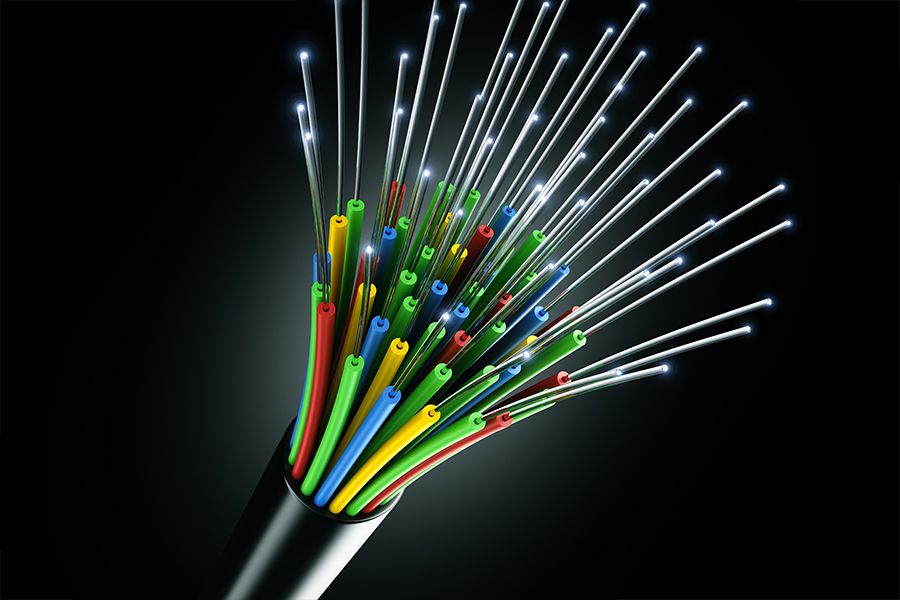
Fibre optic cables transmit information using pulses of light through extremely thin strands of glass or plastic.
Unlike traditional copper cables, fibre does not transmit data using electrical signals. This gives fibre several advantages, particularly when high bandwidth and long-distance connectivity are required.
Fibre optic infrastructure is commonly used for backbone connections, data centres, telecommunications, enterprise networks and connections between buildings.
It is particularly useful where large amounts of data need to move quickly and consistently across longer distances.
What Is Copper Cabling?
Copper cabling uses electrical signals to transmit data. Ethernet cables such as Cat5e, Cat6 and Cat6A are commonly used in business networks.
Copper remains one of the most widely used networking technologies because it is practical, relatively affordable and easy to install.
It is commonly used for connecting computers, printers, access points, IP phones, network switches and other devices within offices and buildings.
For many standard office environments, a properly designed copper network can provide excellent performance.
Fibre vs Copper: What Is the Difference?
One of the biggest differences is transmission distance.
Copper Ethernet connections are generally designed for shorter network runs, while fibre can carry data across significantly greater distances without the same level of signal degradation.
Fibre also provides extremely high bandwidth and is well suited to environments where large volumes of data are transferred continuously.
Copper, on the other hand, can be more convenient for connecting individual devices within an office because many network devices already support Ethernet connections directly.
Speed and Bandwidth
Modern businesses increasingly depend on fast and reliable connectivity.
Cloud applications, video conferencing, large file transfers, surveillance systems, virtualisation and other data-intensive applications can place significant demands on a network.
Fibre provides a strong foundation for high-bandwidth environments and is particularly valuable for network backbones and connections between different locations.
Copper also continues to support high-speed Ethernet standards and can be an excellent choice for connecting devices within the same building.
The important consideration is not simply choosing the fastest technology available. The network should be designed around the actual requirements of the organisation.
Distance Matters
Distance is another major factor when selecting cabling.
If a network needs to connect equipment across a large building, multiple floors or separate buildings, fibre may be the more appropriate solution.
Copper is generally better suited to shorter connections, such as those between a network switch and computers, access points or other equipment within an office.
A combination of both technologies is therefore common in professional network installations.
Reliability and Interference
The environment where a cable will be installed should also be considered.
Copper cables can be affected by electromagnetic interference in environments containing electrical equipment, machinery or other sources of interference.
Fibre is not affected by electromagnetic interference because it transmits information using light rather than electrical signals.
This makes fibre particularly useful in environments where maintaining stable communication is critical.
Installation and Cost
Cost is another consideration.
Copper cabling can be more economical for many standard installations, especially when connecting devices over relatively short distances.
Fibre installation can require specialised equipment and expertise, which may increase the initial installation cost.
However, network infrastructure should be viewed as a long-term investment. A slightly higher initial investment may make sense when the network is expected to handle increasing bandwidth requirements for many years.
Which One Should Your Business Choose?
There is no universal answer.
A small office with standard computers, printers, phones and wireless access points may rely heavily on copper Ethernet connections.
A larger organisation with multiple departments, data-intensive applications or multiple buildings may benefit from fibre connections forming the backbone of its network.
In many cases, the best solution is not fibre or copper, but fibre and copper working together.
For example, fibre can provide the high-speed backbone between network cabinets or buildings, while copper Ethernet connections distribute connectivity from switches to individual devices.
Planning for the Future
One of the biggest mistakes organisations can make is designing a network only around today’s requirements.
Technology changes quickly. Businesses add more users, introduce cloud applications, install additional security systems and increasingly depend on reliable connectivity.
A properly planned cabling infrastructure should therefore provide enough capacity and flexibility to accommodate future expansion.
This is where professional network planning becomes important.
Before installing cabling, organisations should consider the number of users, expected bandwidth requirements, building layout, equipment locations and potential future expansion.
Final Thoughts
Fibre optic and copper cabling are both valuable technologies with different strengths.
Fibre is particularly suited to high-bandwidth, long-distance and backbone connections, while copper remains a practical solution for many device-level network connections.
The best network infrastructure is one that matches the organisation’s requirements rather than simply choosing one technology because it is newer.
With proper planning, installation and testing, businesses can create a network infrastructure that provides reliable connectivity today while leaving room for tomorrow’s requirements.
Netonit Tech provides networking solutions including fibre optic infrastructure, networking equipment and structured cabling solutions designed to help businesses build reliable and scalable networks.