

Why Network Infrastructure Matters for Your Business
Almost every modern business depends on its network.
Employees communicate through email and messaging platforms, access cloud applications, share files, connect to internal systems, communicate with customers and use internet-based services throughout the working day.
Behind all of this is a network infrastructure that needs to operate reliably.
When the infrastructure is poorly designed, outdated or unable to handle the demands placed on it, even simple business activities can become frustrating.
Slow connections, unreliable access, network interruptions and poor wireless coverage can affect productivity and customer service.
A properly planned network provides the foundation that allows the rest of the organisation’s technology to work effectively.
What Is Network Infrastructure?
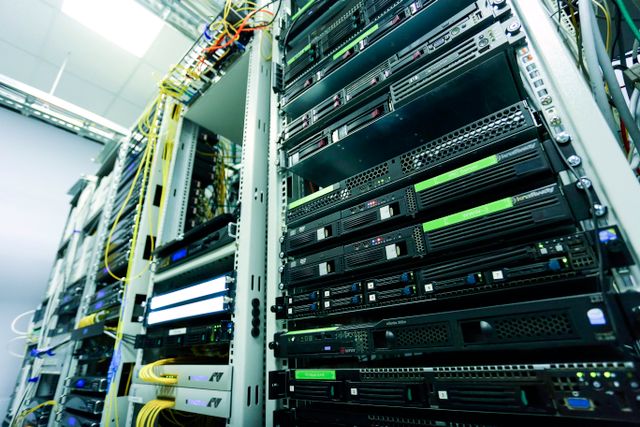
Network infrastructure refers to the combination of hardware, cabling, connectivity and supporting systems used to connect devices and allow information to move between them.
This can include:
- Network switches
- Routers
- Fibre optic cables
- Copper Ethernet cabling
- Wireless access points
- Network racks
- Patch panels
- Servers
- Firewalls
- Network monitoring equipment
These components work together to create the communication system that supports an organisation’s technology.
Reliable Connectivity Supports Productivity
Employees need dependable access to the tools they use every day.
If a network repeatedly disconnects or becomes slow during busy periods, employees may spend valuable time waiting for systems to respond.
A reliable infrastructure helps employees access applications, communicate with colleagues, share information and perform their responsibilities without unnecessary interruptions.
The network may not always be visible to employees, but its performance can have a direct effect on how efficiently the organisation operates.
Network Infrastructure and Business Growth
Businesses rarely remain the same size forever.
An organisation may start with a small number of employees and eventually expand into additional departments, offices or locations.
A network designed only for the current number of users can quickly become difficult to expand.
Good network planning takes future growth into account.
This may involve installing additional network points, providing adequate space in network racks, using scalable switching equipment and establishing a cabling infrastructure capable of supporting future requirements.
The Importance of Structured Cabling
Structured cabling provides an organised approach to connecting devices throughout a building.
Instead of running cables randomly between devices, structured cabling uses planned pathways, patch panels, network cabinets and clearly organised connections.
This makes the network easier to manage and troubleshoot.
It also makes future changes easier because additional connections can be added without having to redesign the entire infrastructure.
Choosing the Right Network Switches
Network switches play an important role in connecting devices within a network.
The appropriate switch depends on several factors, including the number of devices, network speed requirements, power requirements and the expected growth of the organisation.
For example, some environments may require standard switches while others may benefit from managed switches with additional configuration and monitoring capabilities.
Choosing equipment based solely on price can result in limitations later.
The better approach is to select equipment based on the actual requirements of the network.
Fibre as a Network Backbone
Fibre optic connectivity is increasingly important for organisations that require high-speed connections between different areas of their network.
It can be used to connect network cabinets, different floors, buildings or other locations where longer-distance connectivity is required.
Fibre can also provide the bandwidth needed for environments handling large amounts of data.
Combined with appropriate switching equipment and structured cabling, fibre can form an important part of a scalable network infrastructure.
Network Security Starts with Infrastructure
Network infrastructure also has a role to play in security.
Routers, switches, firewalls and other network equipment can be configured to help control how devices communicate with each other and how users access network resources.
Physical infrastructure matters as well.
Network equipment should be properly installed and organised, with appropriate access controls and protection for critical equipment.
Security should therefore be considered as part of network design rather than treated as an afterthought.
Planning for Performance
A good network should not only work when everything is quiet.
It should be capable of handling periods of increased activity.
Businesses should consider the number of connected devices, expected traffic, applications being used and future requirements when planning their infrastructure.
This helps prevent situations where network equipment becomes a bottleneck as the organisation grows.
Why Professional Installation Matters
Even high-quality networking equipment can perform poorly when it is incorrectly installed or configured.
Professional installation helps ensure that cables are properly terminated, network equipment is correctly positioned and connections are clearly organised.
Proper testing is also important.
Testing the network after installation helps identify problems before they affect normal business operations.
Building for the Future
Technology will continue to change.
Businesses are adopting cloud services, video conferencing, IP telephony, connected security systems and other technologies that place increasing demands on network infrastructure.
A network should therefore be designed with flexibility in mind.
Investing in a quality infrastructure today can make future upgrades easier and reduce the need for expensive redesigns.
Final Thoughts
Network infrastructure is more than a collection of cables and devices.
It is the foundation that connects the people, systems and technology a business relies on every day.
A well-designed network can improve reliability, support productivity, simplify future expansion and provide a stronger foundation for adopting new technologies.
For organisations planning a new installation or upgrading an existing network, careful planning is one of the most important steps.
Netonit Tech provides networking equipment, fibre solutions and structured cabling designed to help businesses build dependable and scalable network infrastructure.